Timing Patterns in Soccer Goals and Basketball Scoring: Insights for Multi-Sport Parlays
Written by Ulrich Friedrich · Aug 5, 2026
Timing Patterns in Soccer Goals and Basketball Scoring: Insights for Multi-Sport Parlays
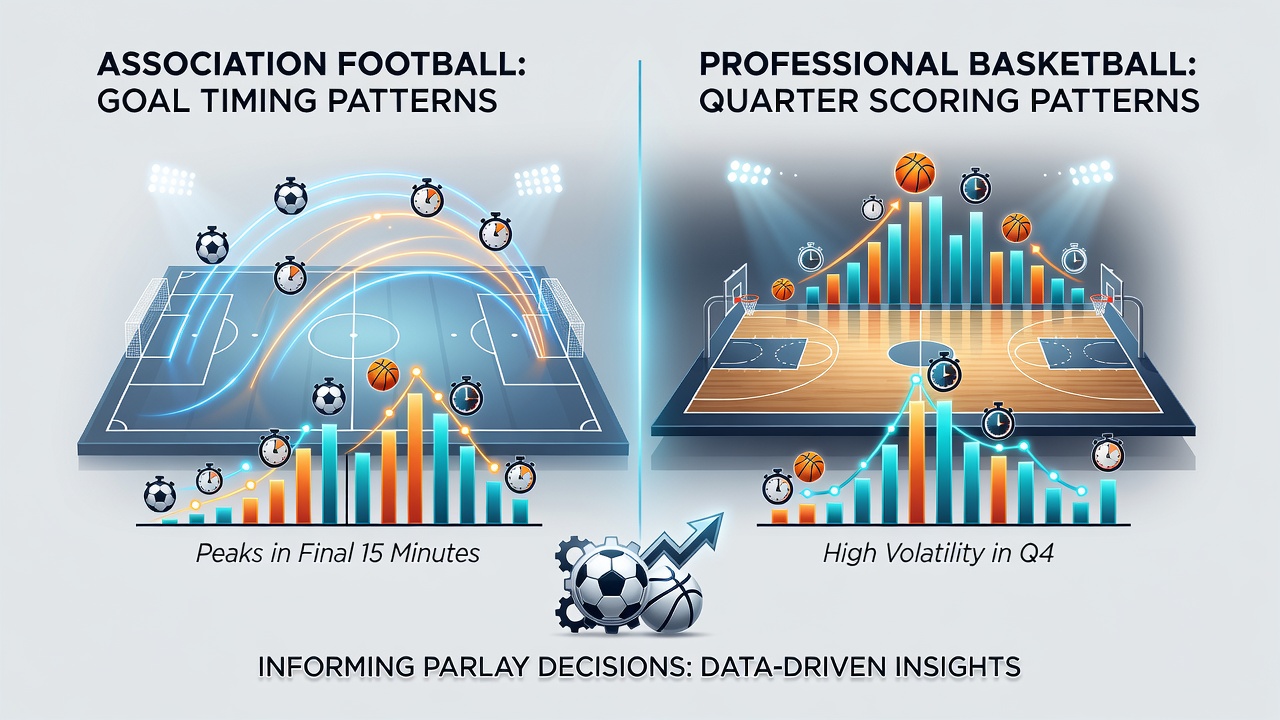
Patterns in goal timing within association football reveal consistent distributions where first-half strikes account for roughly 42 percent of total goals across major European leagues while second-half tallies rise notably after the 70-minute mark according to aggregated match data from the past five seasons and similar trends appear in professional basketball where fourth-quarter scoring surges often decide outcomes in over 35 percent of NBA contests.
Distribution of Goals Across Football Matches
Researchers tracking thousands of matches in leagues from Spain, Germany, and Italy have documented how early goals cluster between minutes 15 and 30 whereas late drama concentrates between minutes 80 and 90 with stoppage time adding further variance and these clusters matter for parlay builders who combine football results with basketball spreads because a late goal can shift total goals or handicap lines in ways that align with fourth-quarter basketball momentum swings.
Observers note that teams trailing at halftime in football tend to increase shot volume by 18 percent in the second half based on tracking data from Opta and this adjustment creates opportunities for over-2.5 goals bets when paired with basketball games featuring high fourth-quarter team totals.
Quarter-by-Quarter Scoring Trends in Basketball
Professional basketball leagues including the NBA and EuroLeague show first-quarter scoring averages around 26 points per team while third quarters often dip slightly before fourth-quarter explosions push combined team outputs above 55 points in nearly half of all games and these patterns provide concrete anchors for parlay constructors who seek correlations between late football goals and basketball comebacks.
Data from the 2025-2026 season indicates that games decided by fewer than five points feature 62 percent of their scoring in the final 12 minutes according to league tracking systems and this concentration allows bettors to time parlay legs involving both sports when schedules overlap during international windows.
Combining Timing Data for Cross-Sport Parlays
Analysts examining simultaneous football and basketball fixtures in August 2026 have begun layering goal-minute statistics with quarter-specific basketball metrics to identify edges in accumulator bets and one approach involves selecting football matches with elevated second-half goal probabilities alongside basketball contests projected for strong fourth-quarter outputs based on rest advantages or defensive fatigue indicators.
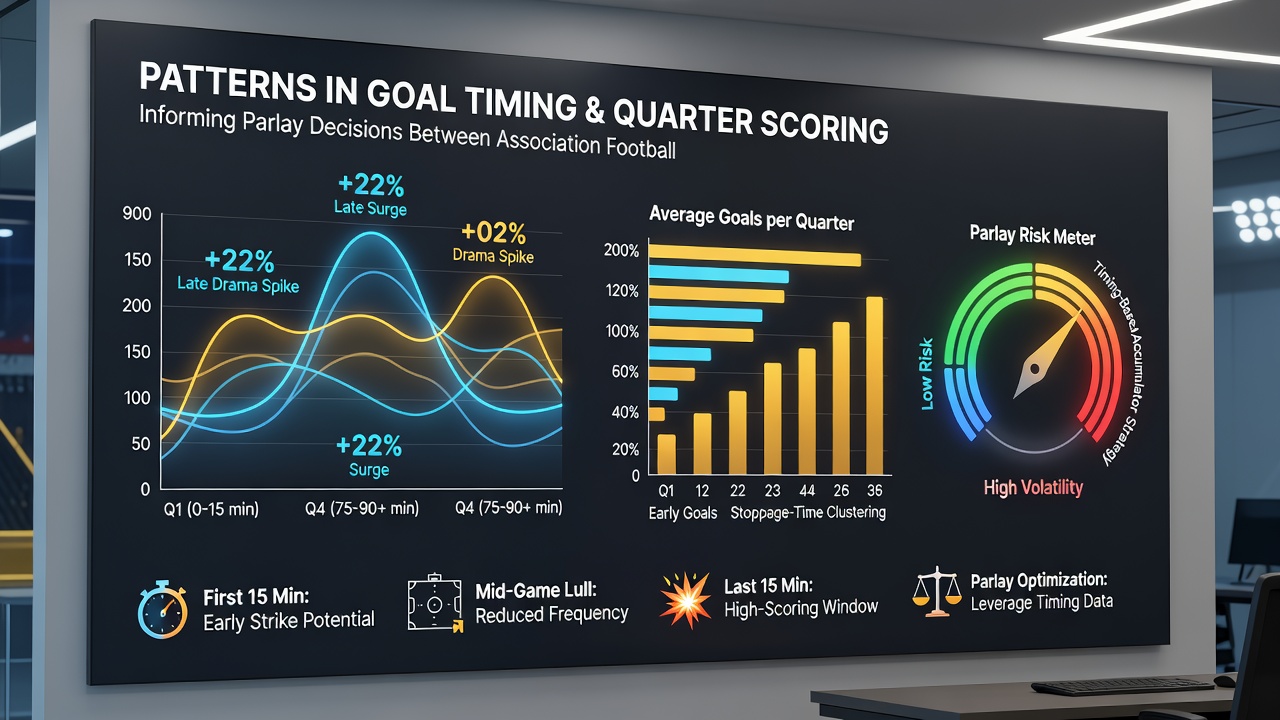
Studies from sports analytics groups at Canadian universities have quantified how a football goal after minute 75 correlates with a 12 percent increase in total match goals while basketball teams with strong bench units post higher fourth-quarter efficiency ratings and these two factors together create measurable overlaps for multi-leg parlays that span both sports.
Industry reports from the Australian Sports Commission highlight how timing-based filters applied to historical datasets improve parlay hit rates by identifying periods of elevated scoring across codes and such methods rely on open league statistics rather than proprietary models alone.
Practical Applications During Overlapping Seasons
During periods when European football leagues and North American basketball seasons run concurrently bettors review historical timing distributions to select legs where late football goals coincide with basketball quarters that historically produce higher point totals and this cross-referencing relies on public datasets from sources such as NBA official statistics and UEFA match reports.
Those who monitor player availability and travel schedules note that back-to-back basketball games often lead to reduced third-quarter defense which in turn elevates fourth-quarter scoring and pairing such games with football fixtures that feature teams known for second-half pressure creates structured parlay opportunities grounded in observable patterns.
Conclusion
Patterns in goal timing and quarter scoring supply measurable inputs for constructing parlays that span association football and professional basketball with researchers continuing to refine these correlations through expanded datasets and as the 2026 calendar advances further integration of timing metrics across both sports remains a focus for data-driven decision frameworks.