Strategic Bonus Deployment in Multi-Sport Accumulators from Tennis and Basketball Previews
Written by Ulrich Friedrich · Jul 10, 2026
Strategic Bonus Deployment in Multi-Sport Accumulators from Tennis and Basketball Previews
Accumulators built around daily tennis and basketball previews often incorporate bonus structures that adjust payout multipliers when specific conditions align across matches, and these mechanisms operate within regulatory frameworks established by bodies such as the American Gaming Association. Operators apply these bonuses through automated systems that scan selections for eligibility criteria including minimum odds thresholds and sport combinations. Data from preview services show that tennis matches frequently supply early-session volatility while basketball contests add closing-quarter momentum factors that together create layered accumulator paths.
Preview Integration Patterns
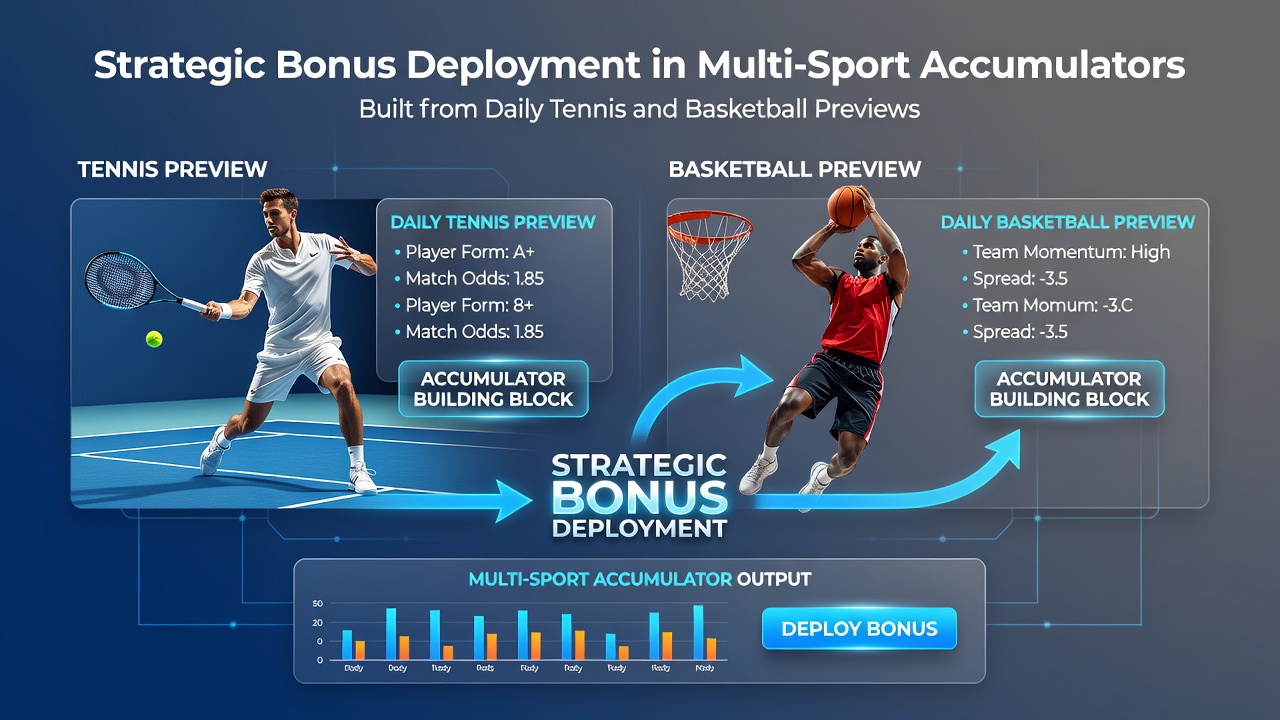
Daily tennis previews typically highlight serve percentages, break-point conversion rates, and surface-specific statistics that feed directly into accumulator construction, whereas basketball previews emphasize pace metrics, three-point efficiency, and comeback frequency data. Those who compile these accumulators combine selections across both sports because the independent variables reduce correlation risks compared with single-sport builds. In July 2026 market reports indicated increased volume in such cross-sport combinations during major tournament overlaps, and operators responded by refining bonus triggers to maintain compliance with regional licensing requirements.
Bonus Trigger Mechanics
Bonus deployment activates when accumulators meet predefined parameters such as leg count and aggregate odds, which operators calculate using real-time feeds from both tennis and basketball events. Systems apply tiered multipliers that scale with the number of qualifying legs, and these calculations run automatically once all selections finalize. Research from the Responsible Gambling Council documents how such automated processes maintain transparency through published terms that specify eligibility windows and exclusion rules for voided matches.
Accumulator builders often sequence tennis selections ahead of basketball ones within the same slip because early tennis results provide confirmation points before later basketball tip-offs. This sequencing allows adjustments if initial legs underperform while preserving the bonus structure for remaining combinations. Preview services supply updated probability models that reflect live injury reports and lineup changes, which in turn influence whether a given selection still satisfies the bonus criteria.

Multi-Leg Construction Approaches
Effective deployment requires matching bonus-eligible legs across sports without exceeding platform-imposed maximums on total selections. Observers note that tennis previews frequently contribute two-to-three leg segments focused on set or match winner markets, while basketball previews add corresponding segments centered on total points or spread outcomes. The combined structure must still meet minimum aggregate odds that unlock the bonus multiplier, and operators enforce these thresholds uniformly across all customer accounts.
Preview updates issued throughout the day incorporate revised statistics that can shift a selection from bonus-eligible to ineligible status if odds move below required levels. Accumulator platforms flag these changes in real time, enabling users to substitute alternatives before confirmation. Those monitoring multiple events simultaneously often maintain separate preview streams for tennis and basketball to track these movements without delay.
Regulatory and Operational Context
Operators in licensed jurisdictions must publish bonus terms that detail calculation methods, expiry conditions, and appeal procedures for disputed payouts. July 2026 saw several platforms adjust their documentation to reflect updated guidance from international gaming associations, particularly around cross-sport accumulator definitions. These revisions aimed to standardize how multipliers apply when selections span different event types and time zones.
Preview providers supply the underlying data that feeds both accumulator construction and bonus verification systems, and discrepancies between preview models and final results can trigger manual reviews. Regulatory bodies require operators to retain records of all bonus activations for audit purposes, ensuring that automated decisions align with published rules. This documentation process operates independently of individual user strategies yet directly affects which accumulator combinations receive enhanced returns.
Conclusion
Strategic deployment of bonuses within multi-sport accumulators relies on systematic use of daily tennis and basketball previews to satisfy eligibility conditions established by operators and regulators. The process integrates statistical models from both sports, applies automated verification against published criteria, and maintains compliance through transparent record-keeping. As preview accuracy and platform systems continue to evolve, the frameworks governing these accumulators remain anchored in the same operational and regulatory structures observed through mid-2026.