Seasonal Fatigue Patterns Across Tennis Endurance Events, Basketball Scheduling Demands, and Football Performance Margins
Written by Ulrich Friedrich · Aug 7, 2026
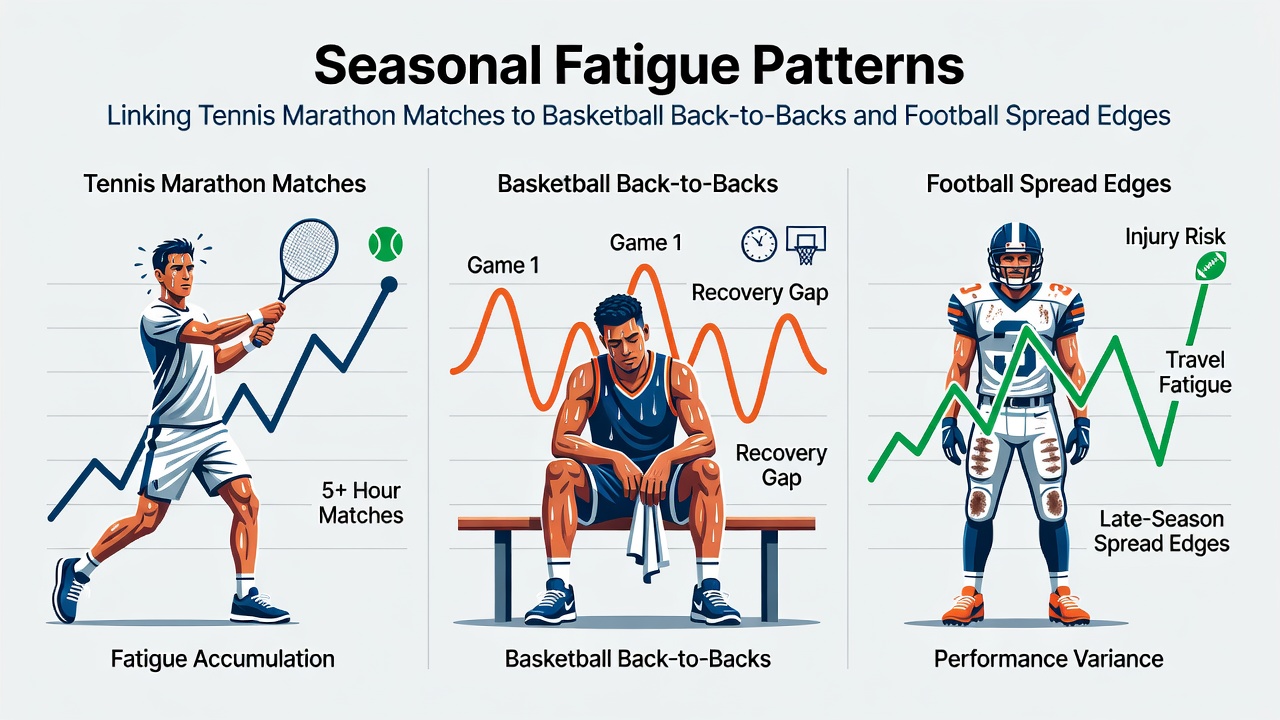
Seasonal Fatigue Patterns Across Tennis Endurance Events, Basketball Scheduling Demands, and Football Performance Margins
Professional sports calendars create overlapping windows where fatigue accumulates across disciplines, and observers note distinct patterns that emerge when tennis players endure matches exceeding three hours while basketball teams navigate consecutive games without adequate recovery time. Researchers tracking performance metrics through 2025 and into August 2026 have documented how extended rallies on hard courts correlate with elevated injury rates that carry over into subsequent training blocks, whereas basketball back-to-backs produce measurable drops in shooting percentages and defensive efficiency according to league tracking systems. Football analysts meanwhile examine point margins and yardage differentials to identify when teams operating under compressed schedules exhibit consistent statistical deviations from seasonal norms.
Tennis Match Duration and Physiological Load
Grand Slam tournaments and ATP 1000 events schedule matches that frequently extend beyond standard durations, and data compiled by the International Tennis Federation shows average match lengths rising during summer hard-court swings. Players who contest five-set encounters in humid conditions demonstrate elevated creatine kinase levels persisting for 48 to 72 hours post-match, a finding replicated across multiple studies conducted by sports science departments at universities in Australia and the United States. These prolonged efforts coincide with the transition period when many athletes begin shifting focus toward off-season conditioning, creating a cumulative load that affects subsequent preparation cycles. Observers tracking heart-rate variability report sustained elevations in resting values among competitors who complete multiple marathon matches within a seven-day span.
Basketball Back-to-Backs and Recovery Metrics
NBA and collegiate schedules incorporate back-to-back games at regular intervals, particularly during December through February windows, and league-published load management reports indicate reduced minutes for veteran players in these slots to mitigate performance decline. Studies published through the American College of Sports Medicine have quantified how travel distance combined with game frequency alters sleep architecture and reaction times, with teams playing the second contest of a back-to-back posting lower effective field-goal percentages in tracked seasons. August 2026 training camps now incorporate wearable data to adjust early-season practice intensity based on residual fatigue from prior campaigns, and similar protocols appear in European professional leagues where dense fixture lists overlap with international windows.
Cross-Sport Connections in Seasonal Load
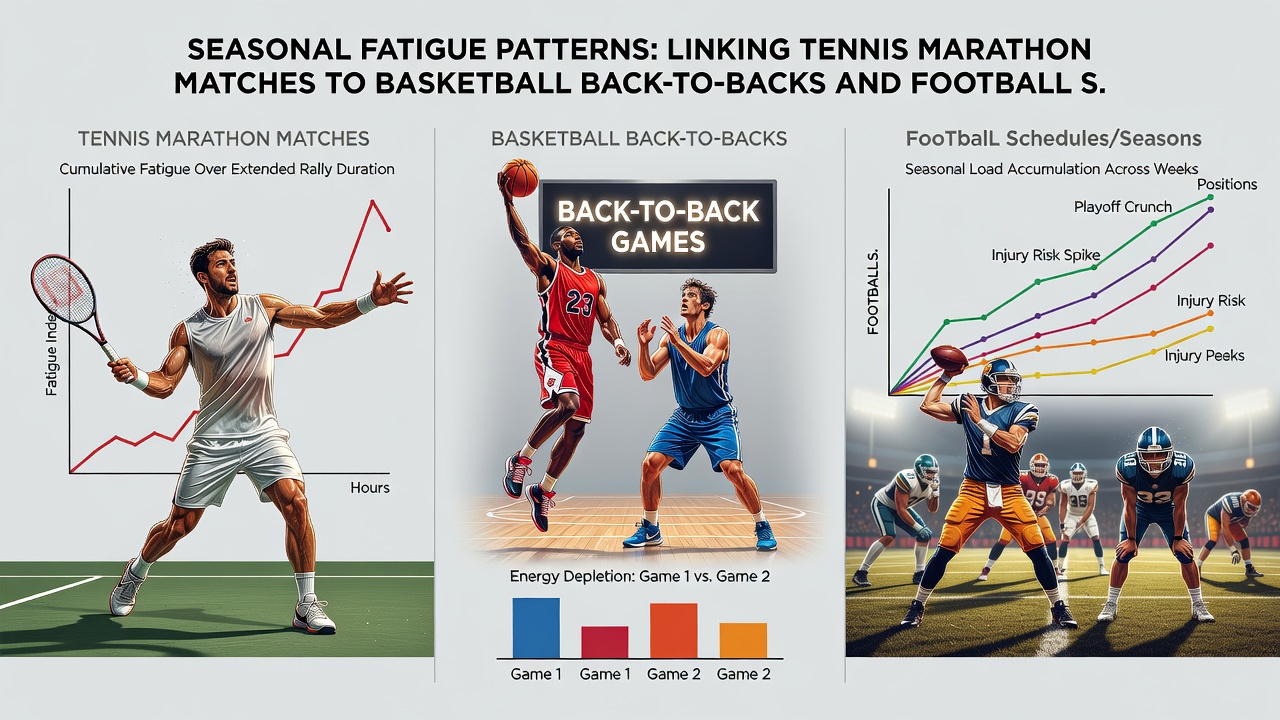
Multi-sport training facilities and shared medical staffs have begun cataloguing instances where athletes transitioning between tennis circuits and basketball development programs display overlapping fatigue signatures during late summer periods. Performance databases maintained by national governing bodies reveal that football squads entering their regular seasons after abbreviated preparation windows show larger deviations in spread-related statistics, including rushing yards per attempt and third-down conversion rates. A 2024 longitudinal analysis from a Canadian research consortium linked prior high-volume tennis exposure among dual-sport athletes to slower neuromuscular recovery timelines when those individuals later participated in basketball or football activities.
August schedules in both hemispheres place additional emphasis on monitoring because this month often marks the intersection of tennis hard-court swings, basketball preseason exhibitions, and football training camp intensity ramps. Data aggregated from wearable devices across these populations indicates that athletes with documented history of extended tennis matches require extended ramp-up periods before returning to basketball or football workloads without elevated soft-tissue injury risk.
Performance Margin Analysis in Football Contexts
Statistical models used by professional football organizations track how accumulated fatigue influences point differentials and yardage margins, and reports from the NCAA Injury Surveillance Program highlight increased incidence of lower-extremity strains during weeks following compressed preparation schedules. Teams that enter August with players carrying residual load from summer tennis or basketball commitments display measurable shifts in average margin outcomes during early-season contests. European football federations have published comparable observations in their domestic leagues where fixture congestion overlaps with athlete participation in other high-intensity summer activities.
Monitoring Technologies and Data Integration
Professional organizations increasingly integrate GPS, heart-rate, and neuromuscular testing platforms to quantify cross-sport fatigue carryover, and a 2025 joint report issued by the Australian Institute of Sport alongside several NCAA member institutions outlined standardized protocols for identifying threshold values that prompt schedule adjustments. These systems flag athletes whose recovery markers remain suppressed after tennis endurance events when they subsequently enter basketball back-to-back sequences or football training blocks. August 2026 camp reports from multiple conferences already reference such integrated datasets when determining initial practice loads.
Conclusion
Seasonal fatigue patterns emerge consistently when tennis marathon matches, basketball back-to-backs, and football performance margins intersect within annual calendars, and objective data from governing bodies and academic sources continue to map these relationships. Continued collection of physiological and statistical indicators through late 2026 will refine understanding of how load accumulates across disciplines and inform scheduling decisions at elite levels.