Optimizing Multi-Sport Accumulators by Aligning Athlete Health Updates and Surface Conditions
Written by Rafael Schmidt · Jul 3, 2026
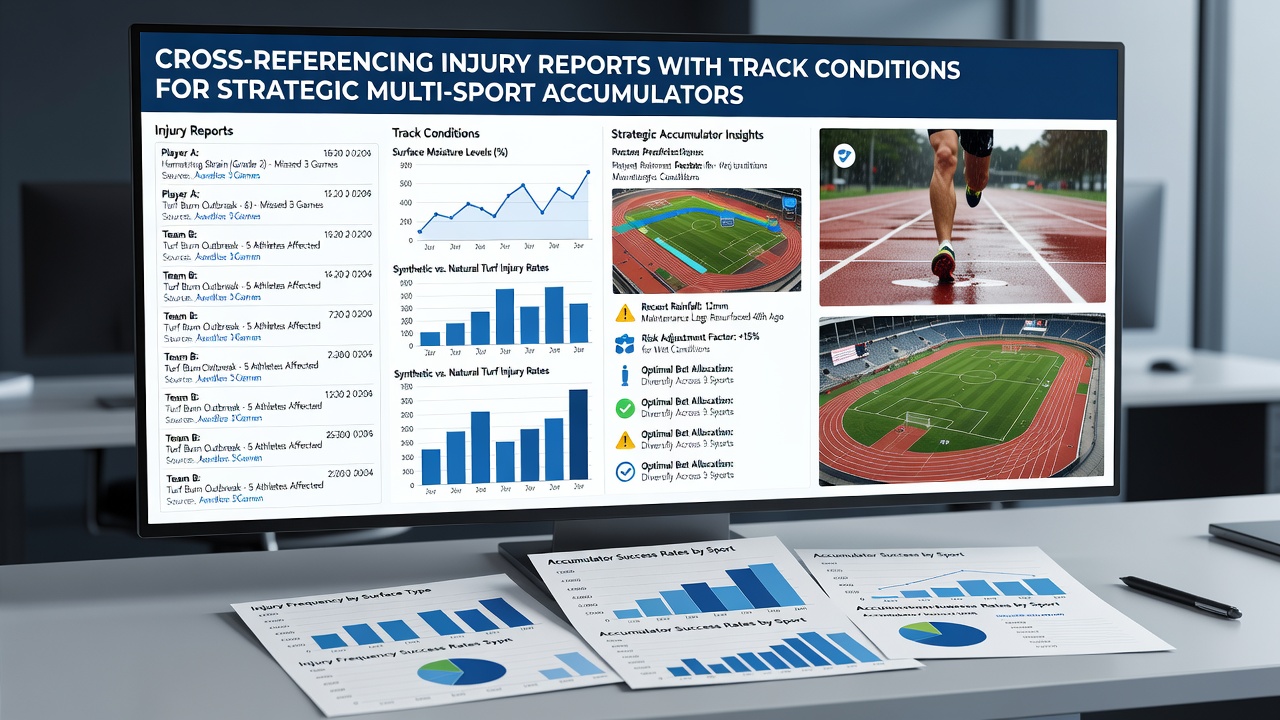
Optimizing Multi-Sport Accumulators by Aligning Athlete Health Updates and Surface Conditions
Cross-referencing injury reports with track and venue conditions has become a core element in building strategic multi-sport accumulators that span football, tennis, basketball, and horse racing. Data from major competitions in July 2026 shows that teams and bettors who integrate these variables achieve more consistent outcomes across combined selections, since player availability directly influences performance metrics while surface states alter speed, traction, and recovery patterns. Researchers at the University of Michigan's sports analytics program have documented how late-breaking injury news combined with updated track reports shifts probability models for accumulators that mix football matches with horse racing events on the same day.
Key Components of Injury Data Integration
Football squads publish weekly injury bulletins that list player status for muscle strains, ligament issues, and concussion protocols, yet these reports often update hours before kickoff when new assessments emerge. Observers note that cross-checking these bulletins against historical recovery timelines allows accumulators to exclude selections where key midfielders remain doubtful, particularly when the opposing side has recorded strong defensive metrics on grass pitches. Tennis tournaments release medical withdrawals and fitness updates through official channels, and those who've studied this data observe that players returning from shoulder or knee problems post lower win rates on slower clay surfaces compared with hard courts.
Track and Venue Condition Factors
Horse racing authorities release official going reports that classify turf as firm, good, soft, or heavy, and these classifications affect stride patterns, stamina demands, and finishing times for specific distances. Basketball venues maintain consistent indoor hardwood surfaces, although humidity levels and court age influence ball bounce and player footing, factors that become relevant when linking basketball momentum plays to horse racing outcomes on the same accumulator slip. Studies from the International Federation of Horseracing Authorities indicate that trainers adjust training regimens when track conditions change overnight due to rainfall, producing measurable differences in performance for sprinters versus stayers.
Building Cross-Sport Accumulator Strategies
One approach involves pairing football teams with favorable injury profiles on dry pitches alongside tennis players who excel on matching court surfaces, then adding horse racing selections whose recent form aligns with reported track conditions. Data indicates that accumulators constructed this way reduce variance because each leg accounts for both human availability and environmental variables rather than relying solely on form guides. Analysts have observed instances where a basketball team's reported fatigue from back-to-back games coincides with a football side missing its primary striker, prompting adjustments to accumulator stakes and leg order.

Software tools now aggregate injury databases with live weather feeds and venue maintenance logs, enabling rapid updates when a tennis star withdraws or a racetrack changes from good to soft. Those who've examined accumulator performance records across July 2026 tournaments find that selections incorporating both injury status and surface data maintain steadier returns through multi-leg combinations than those based on statistical trends alone. External platforms such as NCAA injury surveillance reports provide baseline recovery statistics that users combine with venue-specific data from regional racing bodies.
Practical Application Examples
Consider a mid-July 2026 scenario where a football striker's hamstring concern coincides with heavy rain forecasts that soften a horse racing track, altering favorite selections in sprint races while the football match shifts toward defensive setups. Accumulator builders who monitor both developments simultaneously adjust legs to include teams that historically perform better on rain-affected surfaces and horses proven on soft ground. Tennis matches scheduled on outdoor courts require similar attention to wind and temperature readings, since these elements compound the impact of any unreported muscle tightness listed in pre-tournament medical checks.
Industry reports from the International Federation of Horseracing Authorities highlight how trainers publish track-work notes that reveal adaptation to current going, information that aligns with basketball load-management announcements released by team medical staff. This layered verification process supports accumulator structures that span four sports without overexposure to single-event volatility.
Conclusion
Effective multi-sport accumulator construction in July 2026 relies on systematic cross-referencing of injury reports and track or venue conditions across football, tennis, basketball, and horse racing. Organizations and researchers continue to refine data integration methods that connect athlete health updates with surface characteristics, producing clearer frameworks for strategic selection. Continued monitoring of these variables supports more stable accumulator outcomes as competitions progress through the season.