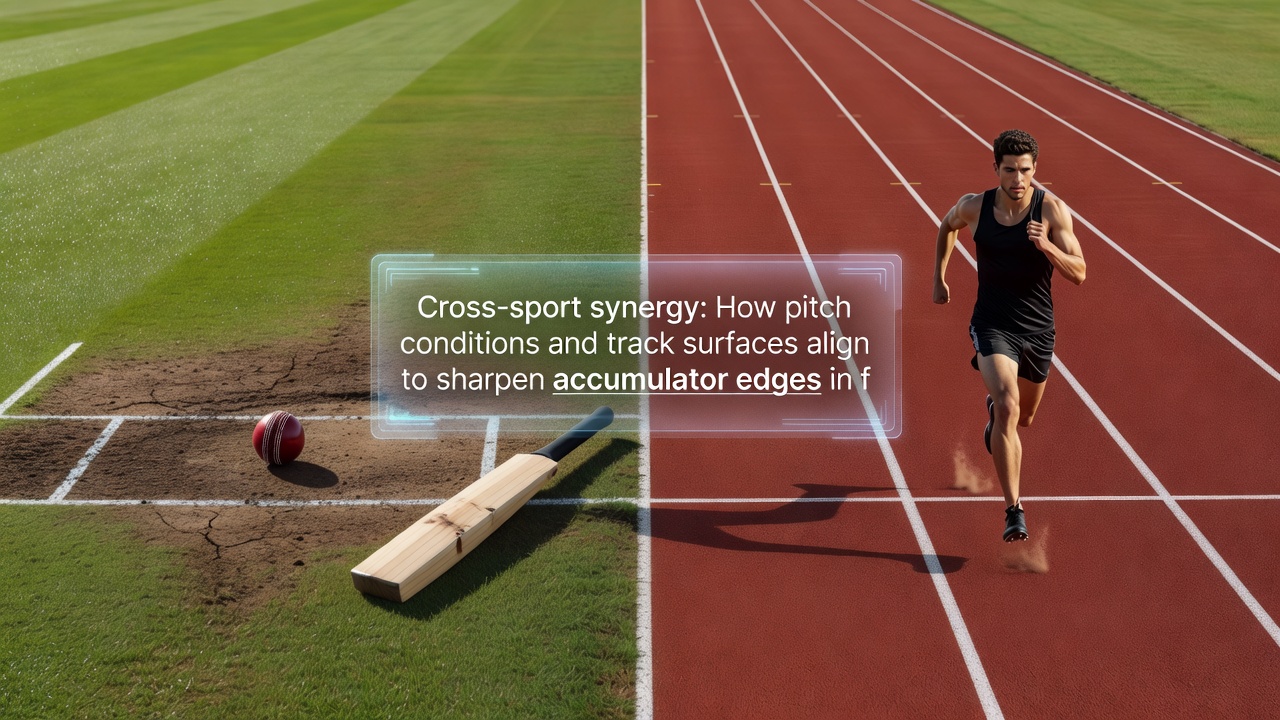
Cross-sport synergy: How pitch conditions and track surfaces align to sharpen accumulator edges in football and racing wagers
Written by Ulrich Friedrich · Jul 26, 2026

Cross-sport synergy: How pitch conditions and track surfaces align to sharpen accumulator edges in football and racing wagers
Analysts track pitch moisture readings and track going reports across multiple venues because these measurements shape scoring patterns in football matches while also dictating pace and stamina demands in horse races. Data from surface monitoring systems shows that saturated grass pitches correlate with fewer goals per game, whereas soft or heavy turf at racing circuits often slows overall times and favors horses with proven stamina on similar ground.
Weather patterns in July 2026 have produced consistent rainfall across parts of Europe and Australia, creating overlapping conditions that observers note in both codes. Football statisticians record lower average goals when groundsmen report pitch saturation above 25 percent, while racing form databases indicate that horses with strong performances on soft ground improve their strike rates by measurable margins under equivalent conditions.
Measuring surface variables across disciplines
Groundstaff at football stadiums deploy moisture meters and hardness testers before each fixture, generating numbers that feed into predictive models used by betting researchers. The same data streams appear in horse racing when clerks of the course issue official going descriptions such as good to soft or heavy, allowing direct comparison of how water content alters outcomes. Studies compiled by the Australian Sports Commission demonstrate that increased surface moisture reduces ball roll distance in football by up to 18 percent, while simultaneously extending winning times in races by similar percentages.
Researchers cross-reference these figures because a weekend of persistent rain often affects both Saturday football fixtures and Sunday race meetings within the same geographic zone. One dataset released by the Canadian Pari-Mutuel Agency in early 2026 highlighted how combined football and racing wagers produced higher hit rates when bettors selected low-scoring football outcomes alongside stamina-oriented race selections during periods of elevated ground moisture.
Building accumulators that exploit aligned conditions
Bettors construct multi-leg wagers by pairing football teams expected to struggle for goals on heavy pitches with racehorses that have recorded superior speed figures on soft or heavy tracks. This approach relies on the statistical observation that weather systems move across regions and leave comparable footprints on different sporting surfaces. Form guides issued by major racing authorities list previous performances on specific going descriptions, while football analytics platforms publish pitch reports that mirror those classifications.
Operators of accumulator syndicates review historical strike rates for selections made under matching surface conditions rather than treating each sport in isolation. Records maintained by European football leagues show that matches played on waterlogged pitches finish with an average of 2.1 goals compared with 2.8 goals on dry surfaces, while Australian racing statistics reveal that favorites win at reduced rates on heavy tracks yet long-priced stayers improve their place percentages.
Regional data sources informing selection processes
Analysts draw on reports from multiple jurisdictions to avoid over-reliance on single-market patterns. Figures published by the New Zealand Thoroughbred Racing Association, for instance, quantify how track ratings shift after rainfall and how those shifts affect dividend payouts in multi-race bets. Parallel data from the German Football League documents goal tallies relative to pitch inspection reports issued by match officials. When these independent datasets align temporally, they supply objective inputs for accumulator construction that span both sports.
Software platforms aggregate these readings into dashboards that flag instances where current pitch and track measurements match historical clusters associated with specific result types. Users then select combinations such as under 2.5 goals in designated football matches paired with horses carrying proven records on soft ground in listed races. The method remains grounded in recorded performance metrics rather than subjective assessments of team motivation or trainer intent.
Conclusion
Surface condition data collected across football and horse racing venues supplies measurable inputs that refine accumulator construction when weather creates comparable environments in both sports. Reports from international racing bodies and football analytics providers continue to document how moisture levels alter scoring rates and winning times, allowing systematic selection of legs that share a common environmental driver. Observers continue to monitor July 2026 conditions as further rainfall episodes test whether these alignments maintain consistent statistical relationships across additional fixtures and meetings.