Bridging Athletic Disciplines: How Track Endurance Stats Inform Tennis and Football Selection Strategies
Written by Alex Schmidt · Jun 5, 2026

Bridging Athletic Disciplines: How Track Endurance Stats Inform Tennis and Football Selection Strategies
Analysts in sports performance have examined ways to move endurance measurements from track and field events into tennis and soccer evaluations, where sustained effort influences outcomes over extended matches or matches that stretch across ninety minutes plus stoppage time. Track data often centers on metrics such as lactate threshold, repeated sprint ability, and aerobic capacity measured through time trials or interval sessions that produce repeatable numbers across training cycles.
Core Endurance Indicators from Track Events
Track specialists record values like velocity at lactate threshold and maximal aerobic speed during standardized tests that occur at regular intervals throughout a season. These figures allow comparisons between athletes because the protocols remain consistent whether performed on an outdoor oval or an indoor facility. Data collected in controlled conditions shows how recovery rates between high-intensity bursts correlate with finishing positions in distance races or relay legs. Observers note that athletes who maintain higher percentages of their peak speed during repeated efforts demonstrate better consistency when events demand prolonged output without full recovery periods.
Mapping Track Values onto Tennis Court Demands
Tennis matches frequently extend beyond two hours and require players to sustain explosive movements after dozens of points. Researchers have tested whether track-derived repeated sprint indices predict how competitors handle extended baseline rallies or multiple tiebreaks in a single day. One study tracked elite players across clay and hard court surfaces and found that individuals with superior track endurance scores maintained higher first-serve percentages in later sets compared with peers who posted lower aerobic markers. Match data from major tournaments reveals that players who cover greater total distance per set while keeping rally lengths above average often come from training backgrounds that include structured interval work similar to track sessions.
Adjusting for Surface and Match Length Variables
Court surfaces alter the physical load even when endurance baselines stay constant. Grass courts shorten points and reduce overall distance covered, whereas clay extends rallies and increases the value of recovery capacity between exchanges. Performance teams therefore scale track measurements against historical match length statistics for each surface before applying them to selection models. In June 2026 several European clay events highlighted cases where entrants with documented track interval improvements advanced further than their ranking suggested, particularly when draws extended into five-set matches.
Extending Track Metrics to Soccer Pitch Performance
Soccer involves intermittent high-intensity efforts across larger areas, with players covering between nine and twelve kilometers per match depending on position. Endurance figures from track training have been cross-referenced with GPS data collected during league fixtures to identify midfielders who sustain work rates deeper into the second half. Teams that integrate track-style lactate testing into pre-season camps report clearer differentiation among players when selecting starting lineups for fixtures scheduled close together. Evidence from multiple domestic leagues indicates that athletes scoring higher on repeated sprint tests adapted from track protocols maintain greater total distance in the final twenty minutes compared with those recording lower scores.
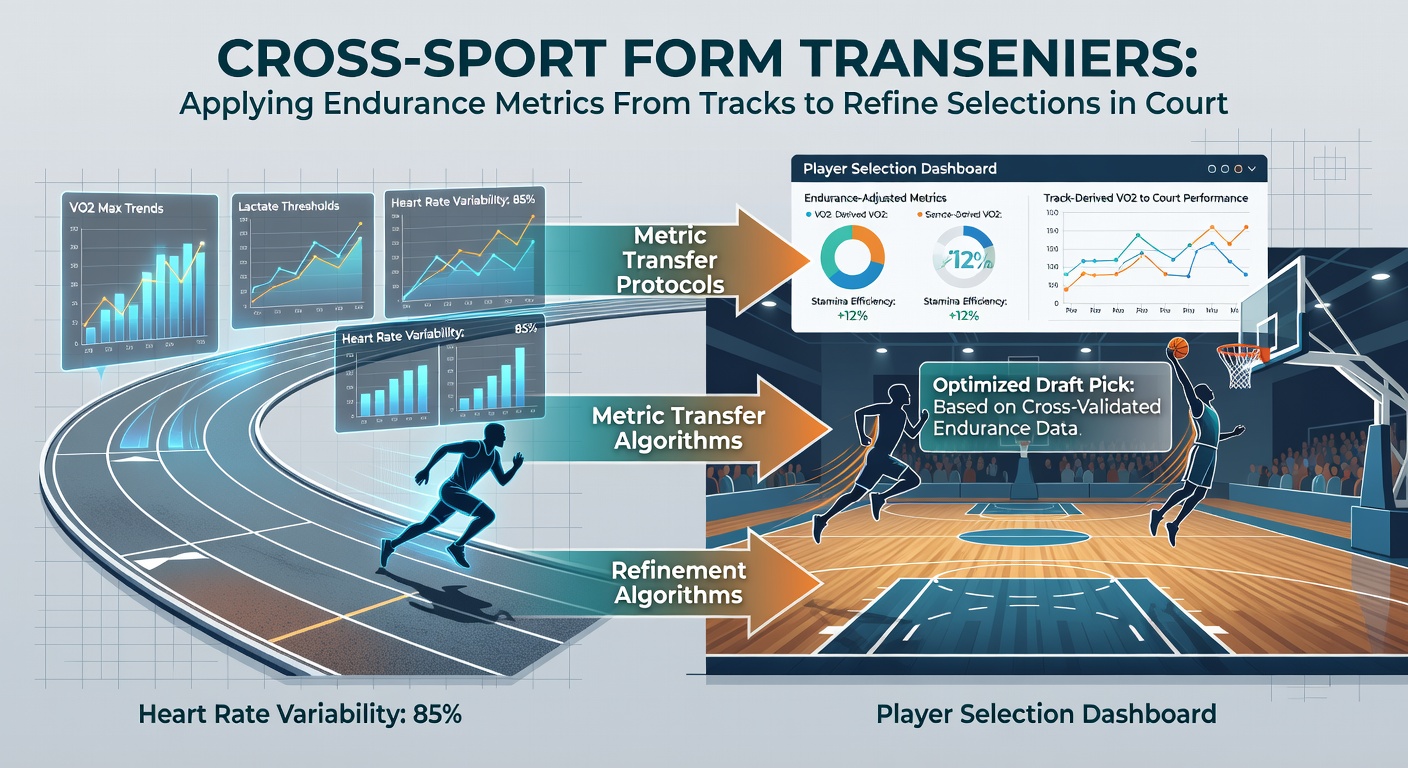
Coaches adjust these metrics for positional requirements because fullbacks and wingers typically record more high-speed runs than central defenders. Track data therefore serves as a baseline that gets modified by sport-specific workload distributions before influencing selection decisions. Studies conducted by the Australian Institute of Sport have demonstrated that combining track endurance thresholds with soccer-specific small-sided game outputs produces more accurate fatigue predictions across congested fixture periods.
Implementation Challenges and Data Integration
Differences in movement patterns mean direct transfer of numbers requires careful normalization. Track athletes run in straight lines or gentle curves, whereas tennis and soccer involve frequent changes of direction that increase eccentric loading. Analysts therefore apply correction factors derived from motion capture studies before feeding values into predictive models. Exercise physiology research outlines methods for aligning these variables across disciplines while preserving the predictive strength of the original measurements. Organizations such as the International Olympic Committee have published frameworks that assist federations in standardizing cross-sport data collection without introducing bias from sport-specific testing environments.
Practical Outcomes Observed in Recent Seasons
Clubs and national federations that adopted integrated tracking reported measurable shifts in how they shortlist players for key competitions. One European soccer academy documented a reduction in late-match concessions after prioritizing recruits who met combined track and pitch endurance thresholds. Tennis national programs in several countries now include periodic track testing as part of talent identification pipelines, particularly for juniors expected to compete in multi-day junior grand slam events. These practices rely on aggregated datasets rather than single tests, because longitudinal records provide stronger signals than isolated sessions.
Conclusion
Cross-sport endurance transfers continue to evolve as measurement tools improve and datasets grow. Track metrics supply objective reference points that, when adjusted for surface, position, and match duration, contribute to refined selection processes in both tennis and soccer. Continued collaboration between track scientists and team sport practitioners supports further refinement of these methods without replacing sport-specific evaluation entirely.